How Much Are Property Taxes in Sioux Falls, SD?
South Dakota may not have an income tax, but every homeowner pays property tax. Here's how it works, what a typical Sioux Falls home pays, and what to budget.
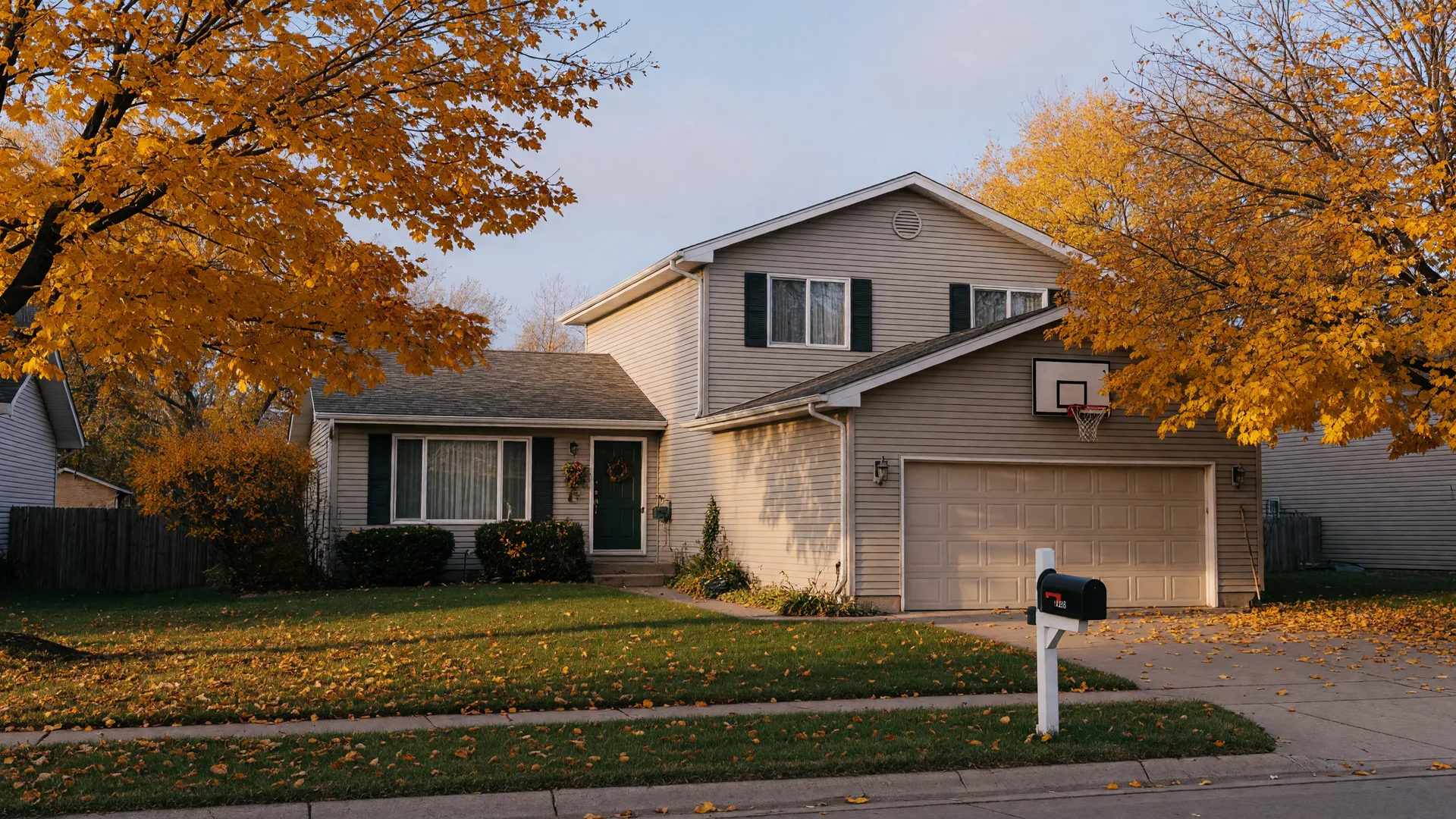
For a typical home in Sioux Falls, the annual property tax bill lands right around 1.2 percent of the home's value. On a $350,000 house, that works out to roughly $4,400 a year, about $370 a month, and your lender usually collects it inside your mortgage payment. Every bill is calculated the same way in South Dakota, and once you understand the formula, you can estimate your own number in about two minutes.
Why everyone asks this question
It's the first question nearly every out-of-state buyer brings to our first conversation. South Dakota has no state income tax, which is a real advantage and the headline reason people move here. But that money has to come from somewhere, and in South Dakota it comes largely from property tax and sales tax. The state's statewide average effective property tax rate is roughly 1.06 to 1.09 percent, a median bill around $2,600 to $2,700, which ranks South Dakota near the middle of the nation. Not the bargain your cousin in Florida quoted, and not the nightmare your friend in Texas warned about.
In Sioux Falls specifically, the effective rate on an owner-occupied home runs around 1.2 percent of value. That puts property tax comfortably below what you'll hear about in many parts of the country, but it's still a real line item, so it pays to know exactly how your bill is built before you commit to a monthly budget.
How South Dakota calculates your property tax
The formula has three steps, and none of them are mysterious:
- First, the county Director of Equalization sets your home at its full-and-true market value. That's the county's estimate of what the property would sell for, and it gets reviewed as part of periodic assessments.
- Second, that market value gets multiplied by 0.85, the equalization factor state law applies to non-agricultural property. The result is your taxable value, and it's the number tax is actually charged on.
- Third, your taxable value is multiplied by the combined mill levy for your address, the sum of the local rates set by your county, city, school district, and any township. One mill is $1 of tax for every $1,000 of taxable value.
The school district is the biggest slice of a Sioux Falls bill, often more than half of it, with the city and county levies making up most of the rest. That means your exact rate depends on which school district and which city limits your address falls in, which is one reason two similar homes a few blocks apart can carry different bills.
A real example on a $350,000 home
Let's run the numbers on a $350,000 house in Sioux Falls, a price point in the middle of the current market:
Market value of $350,000 times 0.85 gives a taxable value of $297,500. Multiply that by a combined owner-occupied levy of roughly $15.00 per $1,000 of taxable value, and the annual bill comes to about $4,460. That's approximately 1.3 percent of the purchase price on day one, and about $370 a month when it's folded into a mortgage payment. If you're comparing against a $300,000 home, scale it down to roughly $3,800 a year, and for a $450,000 home, plan for roughly $5,700.
A few honest caveats: these are planning numbers, not a quote. The actual levy changes a little year to year, the county's assessed value can differ from what you paid, and your bill is set by the address, not the price. What they're great for is comparing one property to another and building a realistic monthly payment before you make an offer.
What about new construction?
New construction deserves a special look, because the first bill often surprises people. A newly built home is assessed at its full value right away, so taxes on a new build typically start higher, relative to the price, than taxes on a 20-year-old house that was last assessed a few years ago. That's real and worth planning for.
The good news is the City of Sioux Falls offers a reduced taxation program for new housing structures. The catch is the paperwork: the application must be filed on or before the date the building permit is issued, so it's a conversation to have at contract time with your builder and agent, not a year later. If you're buying new construction, ask about this before the permit is pulled.
What if your assessment feels too high?
You're not stuck with the county's number. South Dakota homeowners who believe their property is over-assessed can appeal, and the appeal goes to the county, starting with the Director of Equalization's office. The strongest appeals come with evidence: recent sale prices of comparable homes, an independent appraisal, or clear data that the assessed value is out of line with what similar houses nearby are selling for. I've walked clients through this process, and it's more approachable than most people expect, though it does run on deadlines, so don't sit on it.
What this means for your monthly payment
In most transactions, your lender collects property tax with your mortgage payment and holds it in escrow, so the bill arrives in 12 installments rather than one lump sum. That's convenient, but it's also why the tax estimate your lender uses matters so much: if it's too low, your payment gets adjusted up later, and if it's too high, you get a refund. When I help buyers compare homes, I always look at the actual tax history of the specific property, not an average, because the history is what your lender will lean on.
One more thing buyers love hearing: there is no state income tax here, so a bigger share of every paycheck stays in your pocket. Pair that with a property tax bill near the middle of the pack nationally, and the total tax picture in Sioux Falls is genuinely friendly compared with most metros, as long as you budget for it correctly from the start.
The honest take from a local agent
When an out-of-state buyer asks me about taxes, I give them the full picture instead of the slogan: no income tax, a sales tax near 6.5 percent in Sioux Falls once city add-ons are included, and a property tax bill around 1.2 percent of value on a typical home. The right way to evaluate it isn't any single number, it's the whole cost of owning. I'll pull the actual tax history on every home we consider, flag anything unusual, and connect you with a local lender who can put an exact monthly number in front of you before you fall in love with anything.
Property tax FAQ for Sioux Falls buyers
How are property taxes calculated in South Dakota?
Calculating your bill takes three steps. The county Director of Equalization first sets your home at its full-and-true market value. State law then multiplies that value by 0.85, the equalization factor for non-agricultural property, to get your taxable value. Finally, your taxable value is multiplied by the combined mill levy for your address, where one mill equals $1 of tax for every $1,000 of taxable value.
What is the property tax rate in Sioux Falls, SD?
On an owner-occupied home, the effective property tax rate in Sioux Falls runs around 1.2 percent of the home's value. For context, the statewide average effective rate is roughly 1.06 to 1.09 percent with a median bill around $2,600 to $2,700, which ranks South Dakota near the middle of the nation.
How much are property taxes on a $350,000 home in Sioux Falls?
Plan on roughly $4,400 a year, about $370 a month. The math: a $350,000 market value times 0.85 gives a taxable value of $297,500, and multiplying that by a combined owner-occupied levy of about $15 per $1,000 of taxable value lands near $4,460 a year. Those are planning numbers, not a quote, but they are great for comparing one home to another.
Why are property taxes on new construction higher?
Because a newly built home is assessed at its full value right away, its first bill typically starts higher relative to the price than a 20-year-old house that was last assessed a few years ago. The good news is the City of Sioux Falls offers a reduced taxation program for new housing structures, but the application must be filed on or before the date the building permit is issued, so plan ahead with your builder and agent.
Can I appeal my property tax assessment in South Dakota?
Yes. If you believe your home is over-assessed, homeowners can appeal through the county, starting with the Director of Equalization's office. The strongest appeals come with evidence, such as recent sale prices of comparable homes, an independent appraisal, or clear data showing the assessed value is out of line with similar houses nearby. Just watch the deadlines, because the process runs on them.
Does South Dakota have a state income tax?
No, South Dakota has no state income tax, which is the headline reason many people move here. That revenue largely comes from property tax and sales tax instead, so property tax is still a real line item every homeowner should plan for.
Ready to see what a home really costs to own? Read the full buying guide, or contact me and we'll run the numbers together.
Moving from out of state? Start with the relocation guide for the full picture on taxes, cost of living, and neighborhoods.