Home Inspection 101: What Every Sioux Falls Buyer and Seller Needs to Know
A house can look perfect and still hide expensive problems. I'm Jennifer Krosch, a Sioux Falls Realtor with more than 20 years in construction, electrical work, workplace safety, and prior experience with the City of Sioux Falls. This guide explains what an inspection actually covers, the red flags that truly matter, what sellers should fix before listing, and how to read the report so you can negotiate with confidence instead of panic.
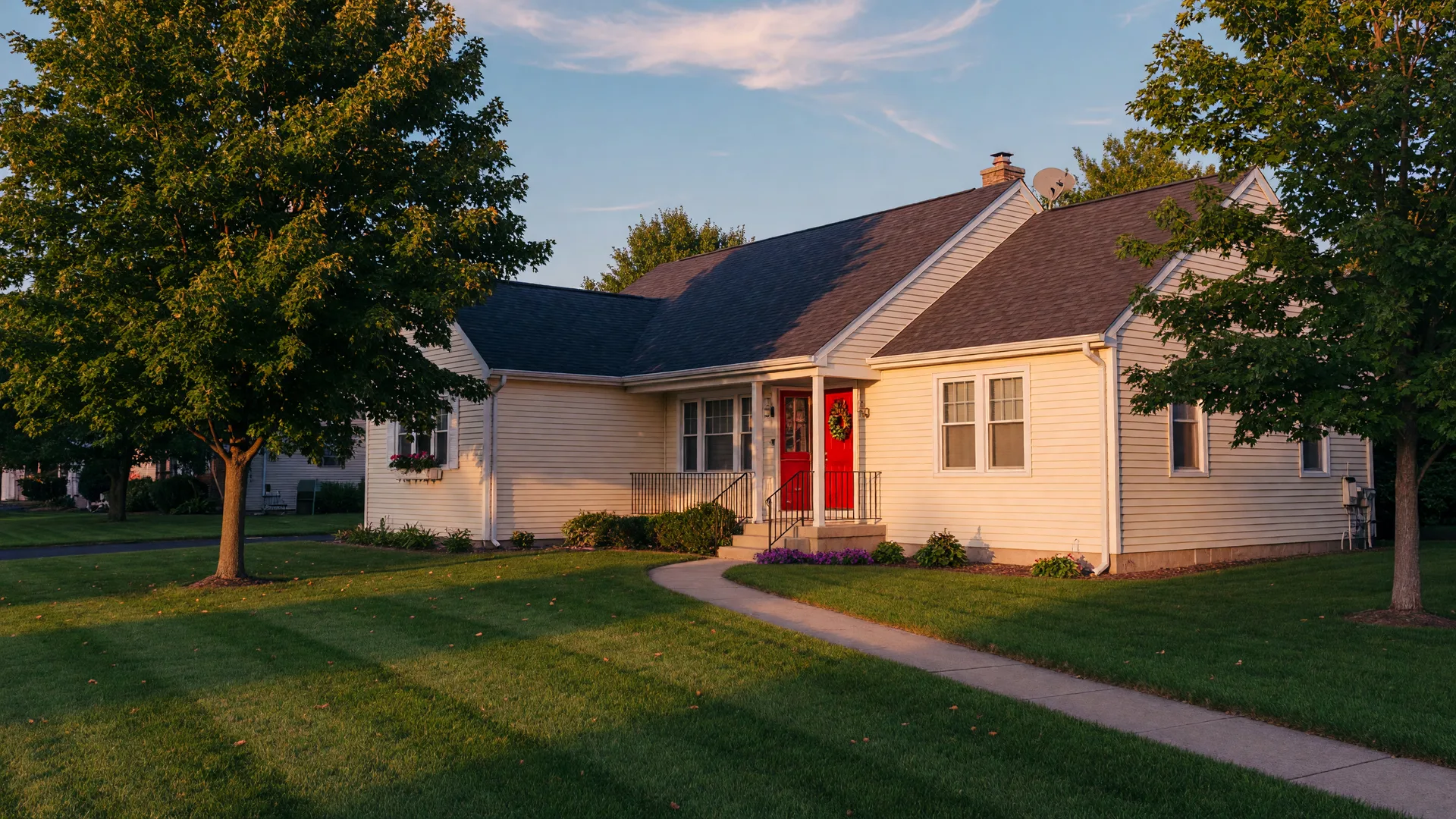
This house looks great. What matters is what's behind the walls, under the roof, and around the foundation.
What a home inspection actually covers.
A home inspection is a visual, non-invasive examination of a home's major systems, done by a licensed professional who walks the roof, crawls the attic and basement, and tests what can be tested safely. In Sioux Falls, most inspections take two to four hours for a typical single-family home. Here's what the inspector is looking at, system by system:
Structural & Foundation
Foundation walls, footings, framing, floors, and load-bearing elements. The inspector records cracks, settling, movement, and anything that suggests the structure is shifting or was modified without proper support.
Roof & Attic
The roof covering, flashing, valleys, vents, and gutters, plus the attic: insulation levels, ventilation, and any stains or dampness that reveal a past or active leak.
Electrical
The panel, breakers, visible wiring, outlets, switches, grounding, and safety devices like GFCIs. Because of my electrical background, this is always a top priority when we walk a home together.
Plumbing
Visible supply and drain lines, fixtures, water pressure, the water heater, and the sump pump. Inspectors look for leaks, corrosion, and signs of past or current water intrusion.
Heating & Cooling
The furnace, air conditioner, ductwork, and vents, including the age, condition, and safe operation of combustion appliances. Carbon monoxide risk from a poorly vented or aging unit is a real concern.
Exterior & Drainage
Siding, trim, windows, doors, porches, and decks, plus how the ground slopes around the house. In Sioux Falls, drainage is one of the first things I check, because water that sits against the foundation becomes a basement problem.
Interior & Ventilation
Walls, ceilings, floors, stairs, windows, and doors, plus how well the house breathes. Bathroom and kitchen exhaust fans, humidity, and moisture control all show up here.
Insulation & Moisture
Attic and wall insulation levels, vapor barriers, and any signs of dampness, mold, or rot. Moisture is the root cause of most expensive home problems, so this gets extra attention.
Inspectors can't see inside walls, behind furniture, or through finished surfaces, and they don't move or dismantle anything. That's why add-ons exist: radon screening, sewer scope, mold testing, well or septic checks, and separate specialists for chimneys, pools, or unpermitted additions. I'll help you decide which add-ons are worth it for the specific home we're looking at, so you're paying for information that matters, not a checkbox list.
Red flags to watch for as a buyer.
Here's the honest truth: almost every older home has something on its inspection report. The goal isn't a flawless house, it's knowing which findings are expensive, which are normal wear, and which are safety issues. These are the big-ticket items that deserve your attention:
Foundation cracks & settlement
Not all cracks are equal. Hairline vertical cracks in poured concrete are usually shrinkage, not failure. What gets my attention: horizontal cracks, stair-step cracks in brick or block, cracks wider than about a quarter inch, floors that slope, and doors that no longer latch. Those can signal movement that is expensive to address, so we get a structural engineer's opinion before you commit.
Water where it shouldn't be
Water damage is the most expensive surprise a buyer can inherit. Look for musty smells, white mineral staining (efflorescence) on basement walls, discolored drywall or ceilings, peeling paint below a roofline, and soft or rotted wood anywhere it meets the ground. If you see evidence of a past leak, ask whether the source was actually fixed or just painted over.
An aging roof
Asphalt shingle roofs generally last 15 to 25 years depending on quality and maintenance. The inspector checks for curling or missing shingles, worn flashing around chimneys and vents, and granules piling up in the gutters. A roof near the end of its life is one of the biggest single line items on a repair request, so know its age and condition before you negotiate.
Electrical systems: what I look for, from years in the trade
Electrical is where my background makes the biggest difference. Homeowners almost never know what their panel is telling them. Here's what I look for on every tour:
The panel brand and age
Federal Pacific (Stab-Lok) and Zinsco panels are the ones I flag immediately. They were installed in many homes from the 1950s through the 1980s and are known to have breakers that can fail to trip, meaning the panel may not protect the circuit the way it should. If I see one, I recommend a licensed electrician's evaluation, and often a panel replacement, before closing.
The wiring type
Knob-and-tube wiring, common in homes built before about 1950, has no equipment ground, and insulation blown over it can create a fire risk. Aluminum branch wiring, used mostly from the 1960s to the mid-1970s, needs special CO/ALR-rated devices and proper connectors because aluminum expands and contracts differently than copper. Neither is necessarily a deal-breaker, but both are know-before-you-buy items.
The panel itself
I look for double-tapped breakers (two wires on one breaker), rust or corrosion inside the panel, burn marks, melted insulation, or a panel that feels warm to the touch. If it smells like burning plastic anywhere near the panel or an outlet, that's a same-day call to an electrician.
Grounding and outlets
Two-prong outlets without ground, three-prong outlets installed without an actual ground, and missing GFCI protection where code requires it (kitchen counters, bathrooms, garages, outdoors, crawl spaces, unfinished basements) are all common in older Sioux Falls homes. GFCI protection is a relatively cheap fix and one of the most worthwhile safety upgrades you can make.
Service capacity
A 100-amp service was fine for the home of 1970. Today, with electric appliances, home offices, EV chargers, and modern HVAC, many buyers want 200 amps. If you plan to add a shop, a hot tub, or a vehicle charger, panel capacity becomes a budget item rather than a detail.
I never tell a client what to do with an electrical finding without an electrician's quote. My value is translating what's in the panel into plain language and honest cost expectations, so you can decide with your eyes open.
Plumbing nearing the end of its life
Polybutylene supply lines (a common 1980s and 1990s material), aging galvanized steel, and old cast iron drains all have known lifespans, and replacing them means opening walls or digging. A water heater is generally good for 10 to 15 years. The report will tell you what's there, and I'll tell you what it means for the next decade of ownership.
HVAC past its prime
A furnace lasts roughly 15 to 20 years and an air conditioner about 12 to 15, and replacing a whole system in our climate runs into five figures. What I look for: the unit's age, maintenance stickers, how recently the filter was changed, and whether the inspector could start and test it. A well-maintained 12-year-old system can be a better buy than a neglected 6-year-old one.
Grading & drainage
This is the classic Sioux Falls issue. Our summers bring hard rain, spring brings snowmelt, and our soils hold water. If the ground slopes toward the house, if downspouts dump water next to the foundation, or if there's a low spot that pools, that water is working against the house all year. Drainage fixes are usually affordable and often overlooked. Foundation repairs from water are neither.
Radon
Minnehaha County sits in EPA Radon Zone 1, the highest potential zone, and local testing has measured average indoor levels above the EPA's 4.0 pCi/L action level. Radon is a colorless, odorless gas and the second-leading cause of lung cancer after smoking. Levels vary house to house, so the only way to know is to test. The test is inexpensive and mitigation is a proven, routine fix in our area. I recommend a radon test on every Sioux Falls purchase.
Sewer lines
A sewer scope inspection runs a small camera down the line to the street. In established neighborhoods with mature trees, roots and aging cast iron or clay pipes are common. It's one of the few add-ons I'd call a habit for buyers in older parts of the Sioux Falls metro.

A close look at the roof and roofline catches the problems you can't see from the yard.
Prelisting repairs that actually matter.
After watching inspections from both sides of the table, I can tell you what scares buyers and what they shrug off. Your goal before listing is simple: take away the reasons a buyer might get cold feet, and give the inspector nothing scary to photograph.
Worth fixing before you list
- Water intrusion at the source: roof leaks, gutter problems, downspouts that dump water next to the foundation, and grading that slopes toward the house.
- Electrical safety items: a Federal Pacific or Zinsco panel, exposed wiring, missing GFCI protection where code requires it, and a breaker that trips every time you use an appliance.
- Surface defects buyers interpret as bigger problems: a cracked front step, a loose handrail, a door that won't latch, a dripping ceiling stain that has been painted over twice.
- A handful of missing or damaged shingles. It is a cheap repair that removes a scary photo from the inspection, provided the roof itself has life left in it.
Leave it, and price for it
- Cosmetic updates like fresh paint colors, new counters, or trendy light fixtures. Buyers expect to put their own stamp on a home, and almost nobody pays a premium for someone else's taste.
- Wholesale replacements of items that still work and have life left, just because they are dated. Price the home for its honest condition instead.
- Renovations you won't recoup, like a full kitchen remodel in a starter neighborhood. The inspection conversation is about condition, not curb appeal.
Hiring your own inspector before you list tells you what a buyer's inspector will find while you still control the timeline. You fix the surprises, price the honest condition of the home, or disclose known issues up front, and go to market with a clean report attached. In my experience, an honest listing with its own inspection report attracts stronger offers and fewer renegotiations, because the buyer's negotiator has nothing to hand you as a giveaway list.
The same builder's eye works the other way: if a pre-listing inspection reveals a big ticket item you don't plan to fix, we price the home for its real condition, and the right buyer still shows up, because nobody likes the surprise version of a problem.
Selling and buying at the same time?
Read the Move-Up Sellers GuideHow to read an inspection report without panicking.
The first time you see an inspection report, it can feel like the house is falling down. It usually isn't. Reports are written to find issues, not to rate the home, so almost every report has a full page of findings. Here's how to separate what matters from the noise:
Big-ticket or safety items
Structural movement, active leaks, electrical hazards, a failing furnace. These are the findings worth negotiating on, and worth contractor quotes before you ask for anything.
Minor repairs
A dripping faucet, a cracked window seal, a squeaky step. Normal home wear, easy for either side to fix, and never worth blowing up a good deal.
Maintenance items
Cleaning gutters, changing furnace filters, servicing the AC, re-caulking a tub. These are on you as a homeowner either way, in every house you will ever buy.
Know the format
Most reports mix photos, descriptions, and a summary page that buckets findings by severity. Common categories are safety or urgent items, major repairs, minor repairs, maintenance items, and informational notes. Some inspectors color-code or number their findings, so ask your inspector to walk you through their scale before you read it on your own.
Why not every item needs to be fixed
An aging roof or an old water heater nearing the end of its lifespan was probably priced into the asking price already. Asking a seller to replace every aging item is like asking them to buy you new tires because yours are due for them. You negotiate on defects and safety, and you plan for normal aging.
What's actually worth negotiating on
Safety hazards, defects that affect the structure or major systems, and repairs that cost real money are worth negotiating on. Get two or three contractor quotes for the big items so your request is backed by numbers, and remember that a closing credit or price adjustment is often fairer to both sides than making the seller do the work.
And what's not
Cosmetic preferences, routine maintenance, and items you'd probably update anyway are not worth negotiation capital. In a competitive market, an overreaching request creates risk; a focused, reasonable one tends to get a better answer.
Watch the clock
Your inspection contingency has a deadline in your purchase agreement, so we work inside that window: schedule the inspection promptly, get your quotes quickly, and negotiate with a plan instead of under a timer.

Jennifer Krosch · eXp Realty · License #21816
Inspecting Sioux Falls homes with a builder's eye.
I've spent more than 20 years in construction, electrical work, and workplace safety, and I worked for the City of Sioux Falls. That means when I walk a home, I read it the way a tradesperson would: how it was built, how it's aging, and what it will cost to care for it. I'm not replacing your inspector. I'm the layer on top, and I check the things that matter most in our specific market:
- Foundation and settling: our clay-heavy soils and freeze-thaw cycles move concrete. I look for cracks that signal real movement and tell you when to call in an engineer.
- Water and grading: after a wet spring I can spot exactly where water wants to go, and whether it's heading for the basement.
- Electrical systems: the panels and wiring common in our older neighborhoods, and what upgrading them really costs.
- Roofs: how our wind, hail, and sun age shingles, and how to read a roof that's been patched versus maintained.
- Newer communities: in Brandon, Harrisburg, Tea, and the new builds around the metro, quality varies builder to builder. I know what good work looks like and what to chase down under warranty.
- Neighborhood infrastructure: streets, curbs, sewers, and how the City plans and maintains them, from my years working inside city government.
Questions I hear from Sioux Falls buyers and sellers.
Does a buyer really need a home inspection?
Yes, and in almost every Sioux Falls purchase the contract includes an inspection contingency. A two-to-four-hour inspection is the one time a professional examines the whole house before you own it. The few hundred dollars it costs is tiny next to discovering three years in that the panel can't handle your appliances. There are exceptions, like some cash sales and estates, but my advice is the same: inspect before you close.
Can a seller fix issues before listing?
Absolutely, and it is one of the smartest moves a seller can make. A pre-listing inspection shows you what a buyer's inspector will find while you still control the timeline. You fix what is worth fixing, price honestly for what isn't, and go to market with a clean report that builds buyer trust instead of handing over a negotiation list.
How much does a home inspection cost in Sioux Falls?
For a typical single-family home, most Sioux Falls buyers pay in the $280 to $450 range, with a 2,000-square-foot home commonly landing around $300 to $400. Larger homes, finished basements, and add-ons like radon testing or a sewer scope can push the total toward $500 or more. Prices vary by inspector, so I can point you to well-regarded local companies who charge fairly.
What happens if the inspection finds problems?
You are not stuck, and you have real options. Depending on what the report finds, we can negotiate for the seller to make repairs, ask for a credit or price adjustment, or, for serious defects, walk away from the deal within your contingency period. The key is a focused, prioritized request backed by real quotes, which is exactly what we build together.
Do I need a radon test in Sioux Falls?
Yes, I recommend one on every purchase here. Minnehaha County sits in EPA Radon Zone 1, the highest potential zone, and local testing has averaged above the EPA's 4.0 pCi/L action level. Levels vary house to house, the test is inexpensive, and mitigation is a proven, routine fix in our area. It is one of those few-hundred-dollar decisions I have never seen anyone regret.
Should I attend the home inspection?
Yes, plan on it for at least the last hour. Walk the property with the inspector, ask what they are seeing and why, and look at the attic and basement as they do. You will learn more about your future home in one afternoon than in ten showings, and you will hear the findings the inspector explains but never writes down.
Is a home inspection needed on a new construction home?
Yes. New construction can hide issues too, from wiring mistakes to an HVAC system installed wrong to insulation floating in the attic. My background is especially useful here: I know what builders sometimes skip, and I will push to have warranty items fixed properly rather than patched.
How long does a home inspection take?
Plan on two to four hours for a typical house, and longer for large or older homes with basements and crawl spaces. Reports usually arrive within 24 to 48 hours, and we use that window to prioritize findings and line up contractor quotes.
What is the difference between an appraisal and an inspection?
An appraisal tells your lender what the home is worth so they can approve your loan amount. An inspection tells you about the home's condition. You need both, and they answer completely different questions, so they are not interchangeable.
Ready to find your home in Sioux Falls?
Let's walk through it together. Search the latest homes across the Sioux Falls metro, book a no-pressure consultation, or just give me a call. Whether you're buying, selling, or relocating from out of state, I'll help you feel confident at every step.
Jennifer Krosch, Realtor · eXp Realty · License #21816 · Realtors of the Sioux Empire