New Construction. Rental Potential. Let's Run the Numbers.
Evaluate available twin homes and townhomes using estimated rent, projected expenses, and practical investment assumptions.
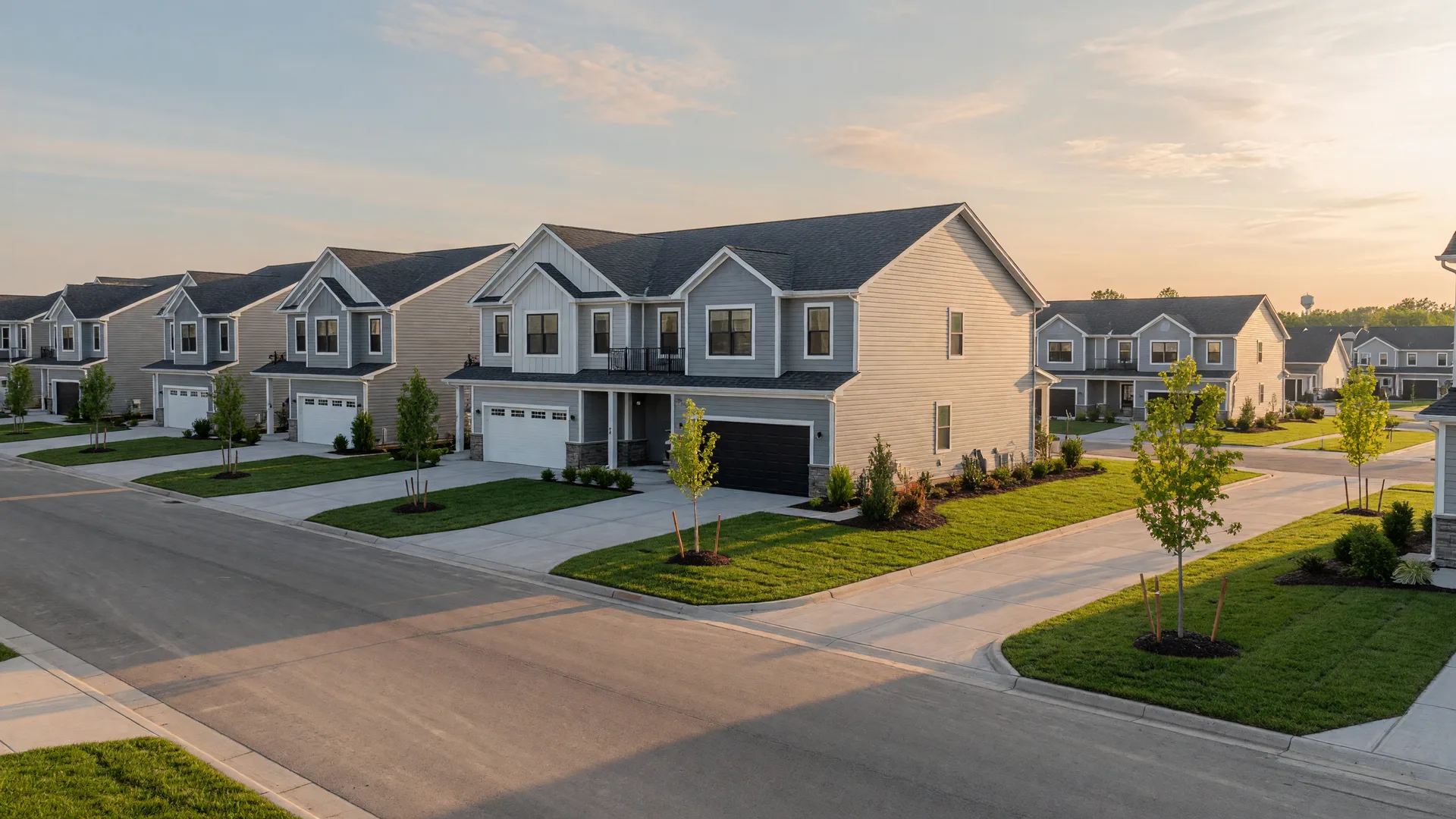
Illustrative image of a new-construction twin home and townhome development. Not a specific listing or property.
A twin home or townhome can make a strong rental, but the finishes never decide the deal. The numbers do.
This guide walks an analytical investor through the key metrics used to evaluate a rental property: gross potential rental income, vacancy, effective income, property taxes, insurance, HOA fees, repairs and maintenance, property management, net operating income, cap rate, debt service, and estimated cash flow. Each term is explained in plain language, along with how it is typically estimated and why the assumptions matter. Everything here is educational, not a promise. All figures are estimates and must be verified for each specific property before you make a decision.
Start with what the property can realistically rent for.
Every analysis begins with income. Work from what comparable properties are actually renting for in the same community, then apply a vacancy allowance to get to a number you can plan around.
Gross potential rental income
The amount the property could collect in a full year if it were rented 100% of the time, with no vacancies and no unpaid rent. Start with the monthly rent comparable twin homes and townhomes actually command in the area, then multiply by 12. Base the estimate on comparable rentals that are leasing today, not on the asking price or your hopes for the unit.
Vacancy allowance
A percentage of gross rent set aside for the periods the property sits empty between tenants, plus a cushion for turnover and possible nonpayment. Five percent is a common starting assumption, roughly a couple of weeks empty per year, but real vacancy varies by neighborhood, season, and price point.
Effective rental income
Gross potential rent minus the vacancy allowance. This is the income you can more realistically plan around, and it is the number that flows into everything that follows. If the rent estimate is optimistic, so is the effective income.
A rent estimate is only as good as the comps behind it. Use comparable new-construction rentals that have actually leased recently, not asking prices, and adjust for differences in size, finishes, garage space, and location within the metro.
Ownership costs run deeper than the mortgage.
These are the recurring operating expenses that come with owning a rental, before any financing is considered. Underestimate them and the whole analysis tilts optimistic.
Property taxes
The annual tax bill on the property. A brand-new build is often assessed at its full value after construction, so the expected bill can be higher than the previous year's on a vacant lot or an older home. Verify the projected amount with the county rather than assuming it matches a neighbor's bill.
Insurance
Landlord or rental-property insurance covering the dwelling, liability, and possibly loss of rent. A new build is quoted at today's replacement cost, which is a real number to get from an actual quote rather than a guess.
HOA fees
Where the twin home or townhome community has an HOA, dues are recurring and typically cover common areas, exterior maintenance, snow removal, and amenities. They are contractual and can increase, so check the current dues, the association's budget, and the rules before you commit.
Repairs and maintenance
The reserve for ongoing upkeep, turnover cleaning, small repairs, and eventual big-ticket replacements. A common rule of thumb is a few percent of rent per year, but the right budget depends on the property's age and condition. New construction is usually lighter in the early years; it is never zero.
Property management
The fee a professional manager charges to handle leasing, tenant communication, maintenance coordination, and collections, often a percentage of collected rent or a flat monthly fee. If you self-manage, still account for the value of your own time and the service you are not paying for.
"My construction background comes in here. I look at the age and condition of every system so the maintenance number is based on the actual property, not a default assumption."
Jennifer Krosch, Broker Associate, eXp Realty
Net operating income and cap rate, with no mortgage in sight.
Net operating income, or NOI is effective rental income minus all operating expenses: property taxes, insurance, HOA fees, repairs and maintenance, property management, and any other recurring costs. Critically, NOI is calculated without the mortgage payment. It measures how the property itself performs before financing, which is what lets you compare one property to another on an apples-to-apples basis regardless of how each buyer chooses to pay for it.
Cap rate is NOI divided by the purchase price, expressed as a percentage. It is a quick way to compare the pre-financing return of one property to another, and to other investments, but it ignores financing, appreciation, and taxes. Use it as one lens, never the whole picture.
Mortgage payments are not included.
Expressed as a percentage.
Add financing, and the real cash flow appears.
Financing costs and debt service are the cost of borrowing: down payment, interest rate, term, and the resulting principal-and-interest payment. Annual debt service is the total of those mortgage payments in a year. It is a financing decision, not an operating cost, which is why it is left out of NOI and layered in only at this stage.
Estimated cash flow is NOI minus annual debt service. Positive cash flow means the property's income covers its operating expenses and its mortgage. Negative cash flow means it does not, and you fund the difference out of pocket each year, betting instead on appreciation, principal paydown, and tax benefits. Cash flow is one number among several, and your financing assumptions drive it as much as the property does.
A small change in rate, down payment, or term can swing cash flow thousands of dollars a year. Use a real financing quote from a lender, not a generic rate, and stress-test the scenario at a higher rate before you commit.
A $449,000 twin home, step by step.
This is an illustrative example only, built on stated assumptions to show how the math flows from rent through cash flow. It is not an actual property, not an offer, and not a guarantee of results. Your figures will differ.
New-construction twin home
Effective income − operating expenses. No mortgage.
NOI ÷ purchase price.
Approximately −$908 per month under these assumptions.
Even with a strong rent estimate, this scenario is cash-flow negative before considering appreciation, principal paydown, and tax considerations. That is not a conclusion. It is exactly why we run the numbers on each specific property.
This illustrative example uses assumed figures for education only. It is not an actual property, not an offer to buy or sell, and not a guarantee of results. Actual rents, vacancy, expenses, financing terms, and taxes will differ, and every figure must be verified for the specific property you are considering.
Small changes move the result more than you would think.
The gap between a great deal and a poor one is rarely the asking price. It is the assumptions: whether the rent estimate holds up, whether vacancy runs closer to 3% or 8%, whether the HOA dues rise, whether taxes come in above the estimate, and whether maintenance stays light or arrives early. Each of these can change cash flow by hundreds or thousands of dollars a year.
That is why this page deliberately shows a single, clearly labeled illustrative example rather than a claim about what any real property will do. For a specific twin home or townhome, verify the current tax estimate, get an actual insurance quote, review the HOA's current dues and rules, pull recent comparable rents, and obtain a real financing quote from a lender. Then run the numbers again, and again at a more conservative rate.
Rental income, cash flow, appreciation, and returns are never guaranteed. A model is a tool for asking better questions, not a promise of outcomes.
Want an Investment Analysis for a Specific Property?
Request current details on new-construction twin homes and townhomes in the Sioux Falls area, including estimated rental income and projected expenses, and I'll walk you through the numbers.
This information is provided for educational purposes only and does not constitute an offer to buy or sell, investment advice, or tax or legal advice. All projections are estimates: rental income, cash flow, appreciation, and returns are not guaranteed, and actual results will vary based on real purchase price, financing, rents, vacancy, expenses, and market conditions. Past results do not predict future performance. Investors should consult qualified tax, legal, and financial professionals before making any investment decision. The illustrative example shown here is not an actual property and is not a guarantee of results.
Krosch Real Estate, brokered by eXp Realty. Jennifer Krosch, Broker Associate, South Dakota Real Estate License #21816. Equal Housing Opportunity. MLS: Realtors of the Sioux Empire.