One More Real Estate Investment Before 2026 Ends?
Explore new-construction investment opportunities in the Sioux Falls area with anticipated completion before year-end.
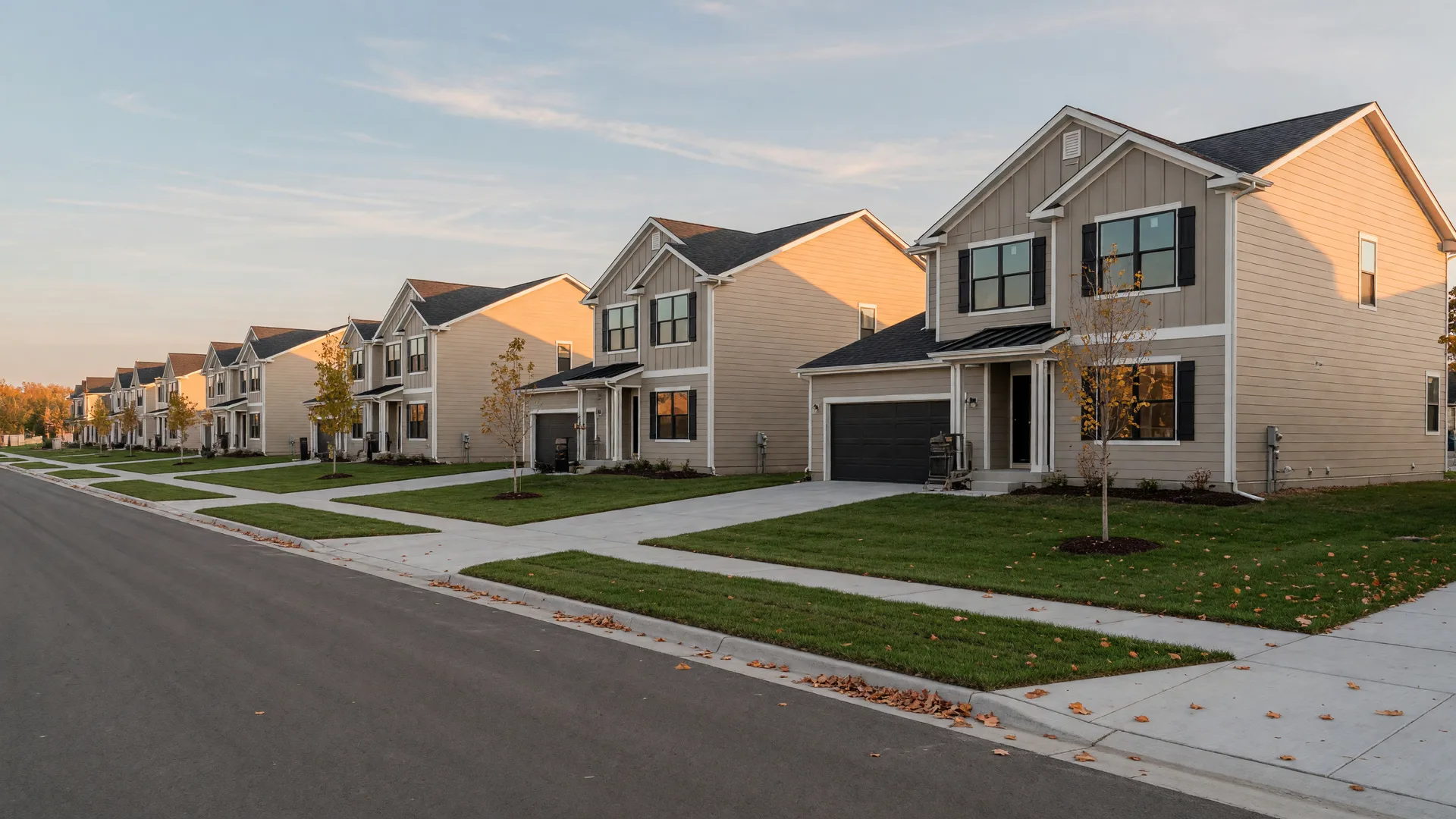
Illustrative image of a new-construction twin home development. Not a specific listing or property.
Is there still time to make one more real estate investment before 2026 ends? In the Sioux Falls area, the answer depends less on the calendar than on the property itself.
Some new-construction twin homes and townhomes are currently targeting completion before year-end, and for an investor working on a timeline, that is worth a conversation. The honest part: closing before December 31 is possible on some properties, but it is not automatic, and owning a property before year-end does not by itself create tax savings. This page walks through the timeline, the financing and due diligence, and the questions to bring to your team. It is educational only and makes no promises of specific deductions or returns.
What the year-end timeline really looks like.
A year-end acquisition is not about signing on December 29 and hoping everything works out. It is a chain of dates: when the home is expected to reach completion, when the builder can schedule closing, when your financing can be finalized, and when the property is actually ready to be rented.
In the Sioux Falls area, several new-construction investment properties are being built with anticipated completion before the end of 2026. Anticipated is the key word. Construction dates move for many reasons: weather, building materials, inspections, and builder schedules. A completion estimate is a target, not a promise.
The practical takeaway: if a before-year-end close matters to you, start the conversation now. Request the current details, compare estimated completion dates, and ask the builder and your lender how firm those dates really are.
The path from estimated completion to ready to rent.
Four steps tend to make up the year-end path for a new-construction investment. None of them is guaranteed, and each one takes real calendar time.
Confirm the completion date
The first step is a real date, not an aspiration. Ask the builder how firm the estimated completion date is, what could move it, and whether the home can close before year-end once it is finished.
Line up financing
Financing a new build for an investment purchase can take longer than a standard resale. Pre-approval, the appraisal, underwriting, and any additional review for a rental property all take time and need to be scheduled around the completion date.
Do the due diligence
A pre-drywall walkthrough, a new-construction inspection near completion, a careful read of the builder's warranty, and a full list of what is included (and what is not) are all part of a thorough review before you close.
Confirm it is ready to rent
Owning a property before December 31 does not automatically create tax savings. In general, a property must be ready and available for rental use before rental depreciation may begin. Confirm the practical and professional details with your team.
Completion dates, closing dates, and rental readiness are all estimates until they actually happen. Build a realistic buffer into your plan, and keep your lender, your tax professional, and your property management team in the loop early.
New-construction rentals, by request.
New-construction twin homes and townhomes in the Sioux Falls area are available to investors by request, often before they are publicly listed. In practice, that means the current availability list, estimated rental income, and completion timelines are shared directly with interested investors rather than published to the general market.
Availability changes quickly, so the list that exists today may not be the same next week. Requesting the current property details is the way to see what is actually available right now, including estimated rental income and completion timelines.
Financing and due diligence before you close.
Financing a new build can take longer than financing a move-in-ready resale, especially for an investment purchase. Lenders need time for the appraisal, underwriting, and sometimes an additional review for a rental property. Getting pre-approved and sharing your purchase agreement with your lender early keeps the closing date realistic.
Due diligence matters just as much on a new build as on an older home, just at different stages. A pre-drywall walkthrough, a new-construction inspection near completion, a careful read of the builder's warranty documents, and confirming what is and is not included (landscaping, appliances, window coverings) can all be part of a thorough review.
Plan for the full ownership costs too: property taxes on a fresh assessment, insurance on a new build, HOA dues where the community has them, and maintenance reserves. A realistic plan includes the expenses that come after closing, not just the purchase price.
Jennifer does not provide licensed inspections, investment advisory services, legal advice, or tax advice. A professional home inspector, licensed lender, attorney, and tax professional each play their own important role in your decision.
1031 exchanges and year-end timing.
A 1031 exchange is one reason an investor may be working on a timeline. Under the general structure, a like-kind exchange allows an investor to defer capital gains tax when a business or investment property is sold and the proceeds are used to acquire another like-kind property, within strict deadlines for identifying and closing on the replacement property.
That means an investor who has sold a property may need to identify a replacement within the exchange's deadlines, and a year-end close can matter to that calendar. It is a common reason investors look for properties with completion timelines they can plan around.
A 1031 exchange has specific rules, deadlines, and qualification requirements, and getting them wrong can have real tax consequences. This overview is educational only. Anyone considering an exchange must consult qualified tax and financial professionals before acting.
Owning before year-end does not automatically create tax savings.
There is a common assumption that buying a rental property before December 31 automatically creates tax savings for that year. That is not how it works, and it is worth being honest about.
In general, a property must be ready and available for rental use before rental depreciation can begin. Ready and available typically means the property is substantially complete, in a condition to be rented, and actually placed in service, not merely owned. A new build that closes in December but is not finished, furnished, or available to tenants may not yet be in service for that purpose.
Every investor's situation is different, and tax rules change and depend on individual facts. This page does not provide tax advice, and it does not promise any specific deduction or savings. Talk to a qualified tax professional about your specific property, your closing date, and your plans.
The questions investors are asking about year-end.
Q. Can I close before the end of the year?
On some new-construction properties, yes, but it is not guaranteed. A before-year-end close depends on when the builder expects completion, whether the home is actually ready to be occupied and rented, and whether your financing can be finalized in time. Request the current details, ask about firm completion dates, and confirm the plan with your lender and a qualified professional.
Q. What does "ready for rental use" mean?
In general terms, a property is ready for rental use when it is substantially complete, in a condition to be rented out, and actually placed in service as a rental, not merely owned. That concept can matter for when rental depreciation may begin. It is a specific tax question, so a qualified tax professional should confirm how it applies to your property.
Q. How does a 1031 exchange work?
A 1031 exchange, in general terms, lets an investor defer capital gains tax by using the proceeds from selling one like-kind business or investment property to buy another, within strict deadlines. Because those deadlines are fixed, an exchange is a common reason an investor works to a calendar. This is only a general explanation: the rules are detailed, and you should work with qualified tax and financial professionals.
Q. Do I need a tax professional?
Yes. Real estate can carry tax considerations around closing dates, depreciation, exchanges, and rental income, and the rules are specific and change over time. Jennifer can help you evaluate properties and the local market, but she is not a tax advisor. Always confirm your individual situation with qualified tax, legal, and financial professionals.
Planning Your Next Rental Property Investment?
New-construction twin homes and townhomes in the Sioux Falls area are available to investors by request. Get the current details, including estimated rental income and completion timelines.
A note on timing: this page's year-end content is seasonal. After December 31, 2026, this page will be updated to evergreen messaging about new-construction investment opportunities in the Sioux Falls area.
Investment property information is provided for educational purposes only and does not constitute an offer to buy or sell, investment advice, or tax or legal advice. Projections, rent estimates, income estimates, and return figures are estimates only; returns are not guaranteed, and rental income and appreciation are not guaranteed. Completion dates are provided by builders and subject to change. Actual results depend on financing, market conditions, and individual circumstances. Investors should consult qualified tax, legal, and financial professionals before making any investment decision.
Krosch Real Estate, brokered by eXp Realty. Jennifer Krosch, Broker Associate, South Dakota Real Estate License #21816. Equal Housing Opportunity. MLS: Realtors of the Sioux Empire.