Expand Your Portfolio. Not Your Repair List.
See why brand-new twin homes and townhomes may be worth considering for your next rental property investment.
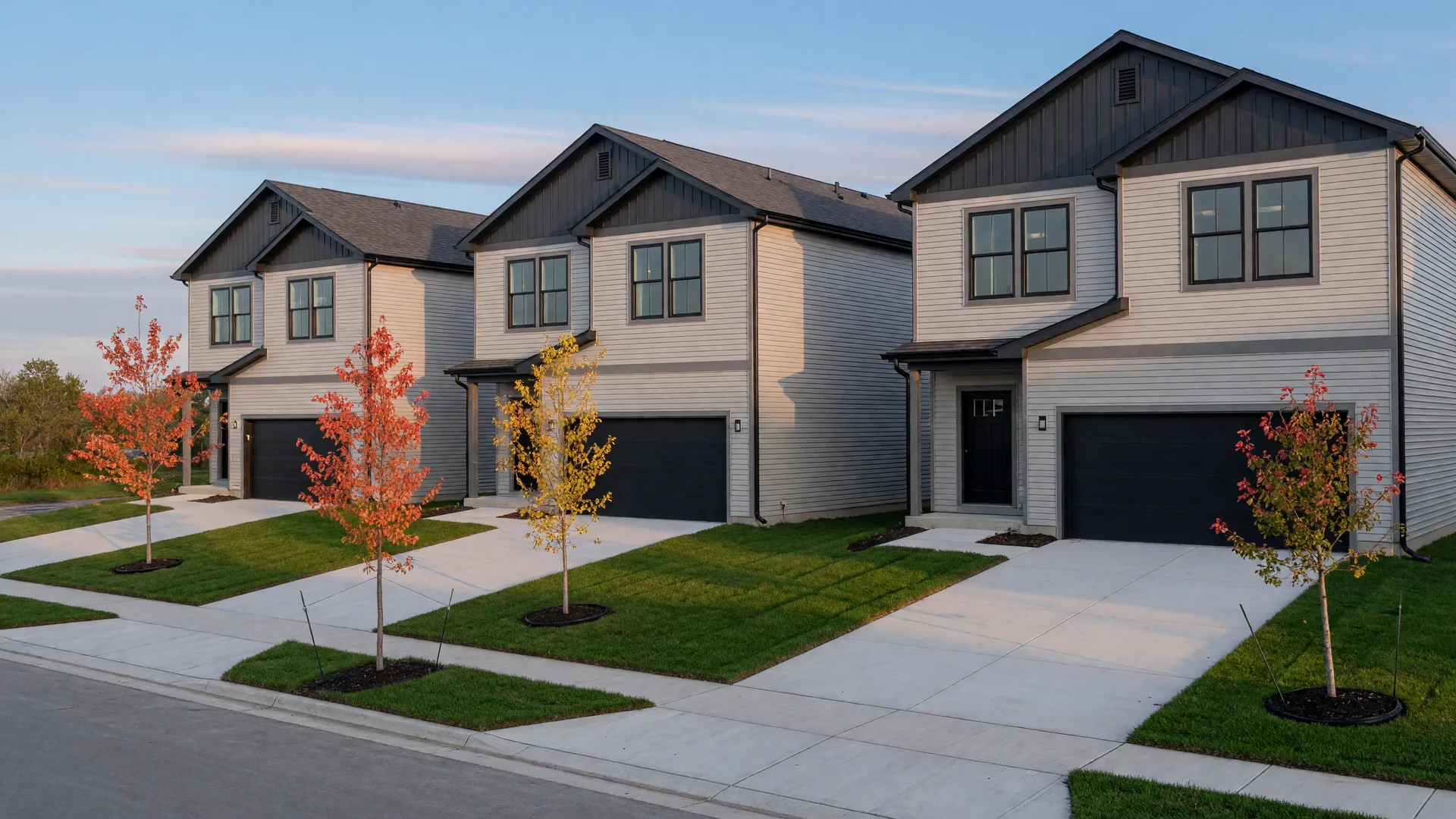
Illustrative image of a new-construction twin home development. Not a specific listing or property.
New-construction twin homes and townhomes in the Sioux Falls area can appeal to investors for a simple reason: newer roofs, HVAC, electrical, and plumbing, fresh finishes, and the rental appeal of a brand-new home.
But a new build is not a maintenance-free build, and builder warranties vary. This guide compares what is different about owning a new-construction rental versus an older resale so you can evaluate the real numbers before you make an offer. Written by Jennifer Krosch, a Sioux Falls Realtor and Broker Associate with a background in construction, electrical systems, and building safety.
New construction vs. an older rental: what changes early.
Older rentals often come with deferred maintenance. The roof may be near the end of its life, the furnace or air conditioner may be twenty years old, the electrical panel may be dated, and the plumbing has already had a long run. Even in a well-kept resale, age-related repairs tend to arrive sooner rather than later after purchase.
A new build starts with everything at year zero: the roof, siding, windows, furnace, water heater, and appliances are all new at the same time. That often translates into fewer early repair calls and fewer surprise expenses in the first several years of ownership, which is a real difference worth modeling into your underwriting.
The honest version: new construction is not maintenance-free. Landscaping needs time to establish, builder punch-list items need attention, and normal tenant wear happens in any rental. The point is not that nothing will break. It is that the early years often carry a lighter repair load.
New major systems, looked at one by one.
The big-ticket items are where new construction differs most from an aging resale. Each of these systems starts with its full expected life ahead of it.
Roof
A new roof carries a full lifespan ahead of it. Early leaks and replacement planning are rarely part of a new build's first decade, unlike many resales where the roof age is a negotiating point from day one.
HVAC
New furnaces and air conditioners are typically more energy-efficient and come with full manufacturer warranties. Filters still need replacing and seasonal service still applies, but the replacement clock starts fresh.
Electrical
Modern panels, wiring, and outlets are planned to current code with capacity for today's electrical loads. Older homes can carry undersized panels or dated wiring that surface as costly findings later.
Plumbing
New pipes, fixtures, and a new water heater mean fewer surprises behind the walls in the early years. Older plumbing can hide corrosion, poor venting, or questionable prior repairs until something fails.
"With a background in construction and electrical systems, I look at these items first on any property. On a new build, the quality still varies by builder, so a pre-drywall review and a new-construction inspection are worth doing before you close."
Jennifer Krosch, Broker Associate, eXp Realty
What builder warranties often cover.
Many builders provide a limited warranty program with the home. Coverage tiers commonly look something like this, though every builder's program is different.
Structural components
Often the longest coverage period, typically measured in years for major structural elements.
Major systems
Heating, cooling, electrical, and plumbing are frequently covered for a shorter stated period.
Workmanship and cosmetics
Finish and workmanship items are commonly covered in the first year, often with a builder walkthrough near the one-year mark.
Appliances
Often covered under the appliance manufacturer's warranty rather than the builder's, with its own term and claims process.
Warranties vary by builder and by community, and they can change. Read the actual warranty documents, understand what is excluded, and ask about the claims process before you close. A warranty is a service agreement with limits and deadlines, not a promise that nothing will ever need fixing.
Why renters tend to like new construction.
Tenants consistently respond to brand-new finishes, efficient layouts, low-maintenance exteriors, and newer community amenities. New construction often leases quickly and can attract renters who value a move-in-ready home with nothing to fix.
Twin homes and townhomes sit in a practical middle: more space than a typical apartment, with less exterior maintenance than a detached single-family home. That combination can widen the tenant pool in growing Sioux Falls communities.
Rents and vacancy are never guaranteed. Demand varies by location, price point, and season, which is why the current estimated rental income on actual opportunities should be reviewed before you commit, not assumed.
The budget-side view of a new build.
New construction often means lower early spending on repairs and replacements, but it does not mean no operating expenses. Budget for the same categories as any rental, with a few new-build additions:
Property taxes
A new build is often assessed at its full value after construction, so the tax bill can be higher than on an older home of similar size.
Insurance
Quotes for a new build reflect today's replacement costs, not the depreciated value of an older property.
HOA dues
Where the twin home or townhome community has an HOA, dues are recurring and can include exterior maintenance, common areas, and snow removal.
Property management, vacancy, and utilities
Management fees, vacancy allowance, and utilities (including during turnover) apply to any rental.
Maintenance reserves
Fund reserves from day one. Early years may rarely touch them, but roofs, mechanicals, and appliances do not stay new forever.
Evaluate total ownership cost, not just the purchase price.
The purchase price is the starting point, not the ending point. Two properties at the same price can produce very different total ownership costs depending on financing, taxes, insurance, HOA dues, planned improvements, and expected maintenance.
New builds deserve extra attention to the items builders may price separately: landscaping, fencing, sprinklers, window coverings, and some appliances. An attractive base price can carry a meaningful list of add-ons before a rental is truly move-in ready.
On the Investor Hub, we compare opportunities side by side: acquisition cost, estimated rent, operating expenses, and long-term holding costs, so you can decide on the full picture rather than the sticker price.
An honest note: no property is maintenance-free, and warranties vary. A new build changes the timing and size of expected repair expenses, but it does not eliminate them. Plan for maintenance, reserves, and the realities of tenant wear in every deal.
Asked honestly, answered simply.
Q. Are new-construction rentals more expensive to buy?
Often, yes on a per-unit basis: a brand-new twin home or townhome usually carries a higher purchase price than a comparable older resale. But the purchase price is only part of the story. Compare total ownership cost over time: financing, taxes, insurance, maintenance expectations, and what the property actually rents for. A newer build can make up part of the difference with lighter early expenses, but the numbers still have to work at the price you pay.
Q. Do builder warranties cover appliances?
Not always, and coverage varies by builder. Structural components may carry a longer warranty while major systems and workmanship are often covered for different periods. Appliances are frequently covered by the manufacturer's warranty rather than the builder's. Read the actual warranty documents, ask what is covered and for how long, and understand the claims process before you close.
Q. What operating costs should I budget for with a new build?
The same categories as any rental: property taxes, insurance, HOA dues if the community has them, property management, vacancy, utilities, repairs, and a maintenance reserve. On a new build, also plan for the one-time items such as establishing landscaping, and remember that property taxes are often based on a fresh assessment after construction.
Q. Is a new-construction rental really lower maintenance?
Usually in the early years, yes: new roofs, HVAC, electrical, plumbing, and appliances mean fewer age-related failures. But it is not maintenance-free. Filters, seasonal service, lawn care, punch-list fixes, and normal tenant wear still happen, and maintenance needs grow as the property ages. Budget maintenance reserves as if repairs will occur, because eventually they will.
Want to Evaluate a New-Construction Investment?
Request the current details on new-construction twin homes and townhomes in the Sioux Falls area, including estimated rental income, before they're publicly listed.
This information is provided for educational purposes only and does not constitute an offer to buy or sell, investment advice, or tax or legal advice. Projections, rent estimates, and return figures are estimates derived from the assumptions discussed here, and returns are not guaranteed. Actual rents, vacancy, expenses, financing, and market conditions will vary, and past results do not predict future performance. Investors should consult qualified tax, legal, and financial professionals before making any investment decision. New-construction details, pricing, completion dates, and warranty terms are provided by builders and subject to change.
Krosch Real Estate, brokered by eXp Realty. Jennifer Krosch, Broker Associate, South Dakota Real Estate License #21816. Equal Housing Opportunity. MLS: Realtors of the Sioux Empire.