Is a Brand-New Townhome a Good Rental Investment in Sioux Falls, SD?
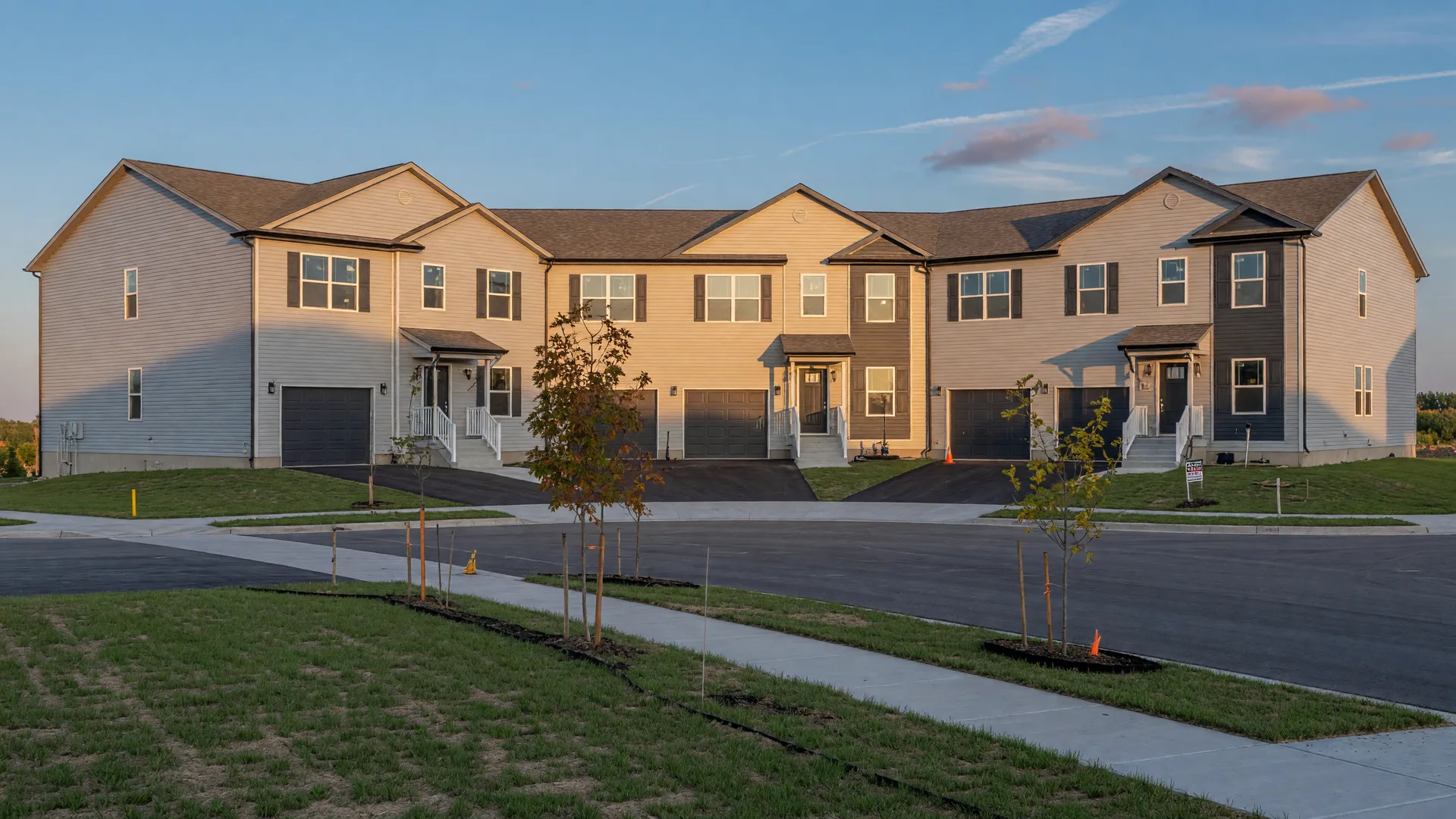
A brand-new townhome is one of the most common first rental properties investors ask me about in the Sioux Falls area, and the honest answer is that it can be a great rental, but only when the price, the HOA rules, and the realistic rent all work together. New construction solves some of the oldest problems in landlording, especially the maintenance surprises, while introducing others, most notably a higher purchase price and the community's rental restrictions. In this guide I'll walk through both sides and show you exactly what to verify before you commit.
The Case for a Brand-New Townhome as a Rental
The appeal starts with the condition of the property. A brand-new townhome comes with a new roof, new HVAC, new plumbing, new electrical, and new appliances, which means the usual age-related failures of an older home simply are not there yet. For the first several years, maintenance tends to be much lighter than on an existing home, which matters to an investor because repairs are one of the biggest unpredictable drains on cash flow.
Modern construction is also more energy efficient. Newer insulation, better windows, higher-efficiency heating and cooling, and improved building envelopes tend to mean lower utility costs, which can matter to tenants and to your property's appeal in a market where utility costs are part of the total rent burden. Some buyers are also drawn to the aesthetic: brand-new finishes and open floor plans rent quickly in many submarkets.
Finally, there is the builder warranty. Most new homes carry a written warranty that covers workmanship, systems, and structure for defined periods, which can absorb some of the cost of early defects. Warranty terms vary widely by builder, so the key word is always "written": review the actual documents, note what is covered, what is excluded, and how long each category of coverage lasts, because the warranty is one of the strongest arguments for new construction, and only if it actually covers what you expect.
The Limitations You Should Weigh First
The most important limitation is price. New-construction townhomes generally sell at a premium to comparable existing homes in the same area. You are paying for the newness, the finishing selections, and the builder's profit on top of the land and construction, so your purchase price, and therefore your financing cost and your cash-flow breakeven, start higher than they would on a resale with a similar floor plan.
A brand-new home is also not literally maintenance-free. The first year often brings a punch list: the small items the builder fixes under warranty, from nail pops to trim gaps to a door that no longer lines up. Punch-list items do not usually threaten cash flow, but they do take coordination, and tenants expect them handled promptly. Plan for the time and the follow-through, and know your rights and responsibilities under the warranty's claim process.
And then there are the rules. Brand-new townhome communities are almost always governed by a homeowners association, and HOA rules commonly govern rentals, occupancy, leasing, and tenant screening. Some communities limit the number of rental units, some require board approval and a minimum lease term, and a small number prohibit rentals altogether. All of these can change your property's usability as an income asset overnight, so the CC&Rs belong at the top of your due-diligence list, and I cover them in detail below.
Rental Demand in the Sioux Falls Area: What to Watch
I cannot publish a reliable future rent forecast for any specific property, and neither can anyone else. What I can offer is judgment from working the market: the Sioux Falls metro has an employment base that continues to draw households, with strong service, healthcare, and technology employers anchoring steady job growth. That kind of employment activity historically supports rental demand, because new workers often rent while they get oriented, and households in transition, relocations, first leases, and downsizing frequently prefer the lock-and-leave convenience of a townhome.
The practical advice is the same advice I give every investor: demand is neighborhood-specific, not metro-wide. Before you underwrite a new-construction townhome, research the specific community. Ask which comparable rentals have actually leased recently and at what rent, not what asking prices are listed at. Look at how long units sit vacant, whether new-construction rentals command a premium over older units, and whether the area's employment growth is close enough to make the unit attractive to the tenants you want. Demand that is real for the neighborhood is what makes the rent estimate defensible. If the neighborhood is unproven, treat the rent estimate as an assumption and stress-test it.
Purchase Price: New Construction Costs More Than Existing
New-construction pricing generally runs above comparable existing homes. You are buying a finished product with no deferred maintenance, no functional obsolescence, and no updating bill, and the market prices that in. For an owner-occupant, that premium buys peace of mind. For an investor, it changes the math, because the rent a townhome can command is set by the market, not by what you paid for it.
This is the single most common mistake I see with new-construction rentals: assuming that because the purchase price is higher, the rent will be proportionally higher. It rarely works that way. A brand-new townhome might capture a modest premium over an older comparable, but the gap between new-construction pricing and what the neighborhood actually rents for is often far larger. The result is a property where financing, taxes, insurance, and HOA dues are all based on the new value, while rental income is based on the market, and investors can end up cash-flow negative before they break even. Buying at new-construction prices for a rental requires realistic rent expectations, and the price only makes sense if the market can support them.
HOA Rules: Read the CC&Rs Before You Buy
For an investor, the HOA documents are the single most important thing to read before you commit to a new-construction townhome. The covenants, conditions, and restrictions (CC&Rs) and the association's rules commonly govern rental use in ways that can change your whole investment thesis:
- Whether rentals are permitted at all in the community.
- Whether there is a cap on the number or percentage of rental units.
- Any minimum lease term, for example, leases of six months or a year or more.
- Whether tenants must be screened, approved, or charged an application fee by the board or management company.
- Who maintains the exterior, the roof, the common walls, and the grounds, and what that costs in dues.
- How rules are enforced and amended, because an HOA that changes its rental policy later can affect a property you already own.
Ask the builder or seller for the current CC&Rs, the bylaws, the rules and regulations, and the latest budget, ideally as part of your due diligence before the offer, and confirm the rental policy in writing. A community that prohibits or heavily restricts rentals may be a fine place to live as an owner-occupant, but it is the wrong asset if your plan depends on renting it out. As a courtesy, I always verify the rental rules with the HOA or property manager for an investor client before they bid on a new-construction unit.
Operating Costs to Estimate Before You Underwrite
Once you have a realistic rent and a confirmed rental policy, the next step is the operating expenses. Estimate each of these for the specific property rather than carrying generic rules of thumb into your underwriting:
- Property taxes. A brand-new build is often assessed at its full new value after construction, so the expected tax bill can be materially higher than the previous year's on the lot or on an older home. Verify the projected amount with the county assessor's office.
- Insurance. Landlord or rental-property insurance, including dwelling coverage, liability, and possibly loss of rent, quoted at today's replacement cost for the new building. Get an actual quote, not a guess.
- HOA dues. Recurring monthly or annual dues that typically cover common areas, exterior maintenance, snow removal, and amenities. They are contractual and can increase, so check the current dues, the association's budget, and its reserves.
- Repairs and maintenance. A reserve for ongoing upkeep, turnover cleaning, small repairs, and eventual big-ticket replacements. New construction is lighter in the early years, but it is never zero, and a reserve should be treated as a real line item.
- Property management. If you plan to hire a manager, the fee is often a percentage of collected rent. If you self-manage, budget for the value of your own time and the services you are not paying someone else for.
- Vacancy. A realistic allowance for the periods the unit sits empty between tenants, plus turnover costs. Every property experiences vacancy eventually, so plan for it instead of assuming 100% occupancy.
A common framework is to estimate gross potential rent for a full year, subtract a vacancy allowance to get effective rental income, then subtract operating expenses to get net operating income, and then subtract the mortgage payment to see whether the property cash-flows before you consider appreciation, principal paydown, and tax considerations. The numbers are estimates, and every one of them needs to be verified for the specific address. You can put this into practice with the investment calculator on the Investor Hub, which walks the math step by step, and the Investor Resources hub collects the rest of the education on evaluating Sioux Falls rental property.
Verify the Rent Estimate Before You Underwrite
Every rent estimate is a projection, not a guarantee. The number that comes back from an automated estimator, a builder's marketing sheet, or even a realtor's initial read is an assumption until it is tested against the market. Before you rely on it, verify the current comparable rents: what comparable townhomes in the same neighborhood and price point have actually leased for recently, adjusted for size, finishes, garage space, and location within the metro.
Use actual leased rents rather than asking prices, because asking prices can sit above what units close for. Check whether the comparables are the same product type, a townhome versus a twin home versus a single-family, and check the lease terms, because a longer minimum term can command a different effective rent. Then stress-test the result. If the supporting rent estimate is off by even a few hundred dollars a month, cash flow can swing from acceptable to negative, so run the scenario at a more conservative rent and a higher vacancy assumption. A deal that only makes sense at the most optimistic rent is not a deal you can underwrite safely.
This is exactly where I help investor clients add the most value. I'll run the current Sioux Falls investment property details through the same operating-cost framework and compare options on an apples-to-apples basis. You can request the current investor property report with estimated rental income and completion timelines for the new-construction townhomes and twin homes I'm tracking, and I'll walk you through the numbers on a specific property.

About the author
Jennifer Krosch, Broker Associate · eXp Realty
Jennifer is a Realtor and Broker Associate with eXp Realty in Sioux Falls, licensed in South Dakota (license 21816). Her background across construction, electrical work, and workplace safety, including prior work with the City of Sioux Falls, gives her a practical eye when evaluating new-construction townhomes and twin homes for investors. More about Jennifer · Client reviews
Frequently Asked Questions
Can new-construction townhomes be rented out in Sioux Falls?
That depends on the specific community. Many new-construction townhome developments in the Sioux Falls area allow rentals, but some do not, and many that do allow them still limit the number of rental units, require a minimum lease term, and require tenants to be screened by the HOA. Never assume a rental is allowed: read the community's covenants, conditions, and restrictions (CC&Rs) before you write an offer, and ask the builder or seller for the current rental policy in writing. I always confirm the rental rules with the property manager or HOA board directly before a client commits to a new-construction purchase with rental intent.
What is a townhome vs a twin home?
The terms are used loosely in new construction, and builders do not always label them the same way, so it helps to confirm what the specific product actually is. In general, a townhome is an attached home that shares at least one wall with a neighbor, is typically arranged over two or more floors, and usually carries HOA or property owners association involvement for the exterior, common areas, and grounds. A twin home, sometimes called a duplex-style or side-by-side home, is a single building divided into two separate living units, each with its own entrance, and each owner generally owns their half as real property rather than just the interior. Ownership structure, who maintains the exterior, and the HOA rules can all differ, so ask for the legal description and the association documents rather than relying on the marketing name.
Do HOA rules apply to rentals?
Yes, in any community with a homeowners association, the HOA's covenants and rules apply to owners and their tenants, and they are especially strict around rentals. The CC&Rs typically cover whether rentals are permitted at all, whether there is a cap on the number of rental units, the minimum lease term, required tenant screening and applications, approval by the board, and the fines or enforcement actions if owners violate the rules. These restrictions are common in brand-new communities and can change through amendments, so read the current documents, confirm the enforcement policy, and understand that the HOA can affect who you can lease to, for how long, and at what cost. A rental that looks profitable on paper can look very different once an HOA approval step is in the way.
How long do builder warranties typically last?
There is no single standard, because warranty coverage is defined by each builder's written warranty. Many new-construction warranties cover workmanship and materials for one year, major systems such as heating, cooling, electrical, and plumbing for a period that often extends to two years, and structural components for a longer period, sometimes ten years. Some builders offer extended third-party warranty programs that add to or replace the builder's own coverage. What matters for an investor is not the headline years but the details: what is covered, what is excluded, when coverage starts, whether it transfers to a new owner or a tenant, and how you file a claim. Request and review the warranty documents before you sign, and keep a copy with your property records.
Is a brand-new townhome always a better rental than an existing home?
No, and the answer for a specific property depends on the numbers. New construction usually means lighter immediate maintenance, modern systems, and a written warranty, but it also typically carries a higher purchase price, which means the rent has to cover more. An existing home can offer a lower entry price and an established track record of rents, at the cost of older systems and more frequent repairs. The better question is whether the after-financing cash flow, the rent you can realistically collect, and your tolerance for maintenance work all point the same way for the specific property. I help investors work through that comparison on a property-by-property basis rather than assuming new always beats existing.
Estimates disclaimer
All investment figures on this page are estimates only and are not guaranteed. Rental income, occupancy, cash flow, appreciation, and returns are projections, not promises, and actual results will vary based on the real purchase price, financing, rents, vacancy, expenses, and market conditions. Nothing here is a substitute for a professional property-specific analysis, and Jennifer does not provide licensed home inspection, tax, or legal advice: for those, work with a licensed inspector, CPA, tax advisor, and attorney. Investors should consult qualified tax and legal professionals before making any investment decision.
Thinking through a specific new-construction townhome or twin home as a rental? I'll help you verify the numbers and the HOA rules on a property you are considering. Call or text 605-214-6482, or book a consultation online. No pressure, no guesswork.
Related guides
Investor Resources: the investor education hub from Jennifer Krosch, with cornerstone guides and tools for evaluating Sioux Falls rental property.
Sioux Falls Investment Properties: the Investor Hub with current opportunities and the investment calculator.
Request the investor property report: get current details on new-construction townhomes and twin homes available to investors, by request.
New Construction Costs in Sioux Falls: what a Sioux Falls new build really costs, from base price to total project cost.
New Construction Rental Numbers: a step-by-step walk through NOI, cap rate, and cash flow for new-construction rentals.
Contact Jennifer Krosch: start the conversation about your next home or investment.